
Introduction
Many freelancers, consultants, SaaS founders, and remote service providers earn money from foreign clients now operate through US non-resident LLCs, commonly registered in states like Wyoming or Delaware. This setup often creates additional confusion around income classification.
They get paid in USD, GBP, or EUR and banks call it “export proceeds.” Accountants talk about “source of income.” Tax authorities ask different questions.
They all struggle with one big question:
“If I serve foreign clients, is my income an export of services or foreign source income, or it can be both?”
This is where confusion starts.
In this article, I will explain everything from scratch about export of services vs foreign source income, explaining what “Export of Services” and “Foreign Source Income” really mean, how they are different, how taxes apply to each (especially in Pakistan), and how this matters to your money.
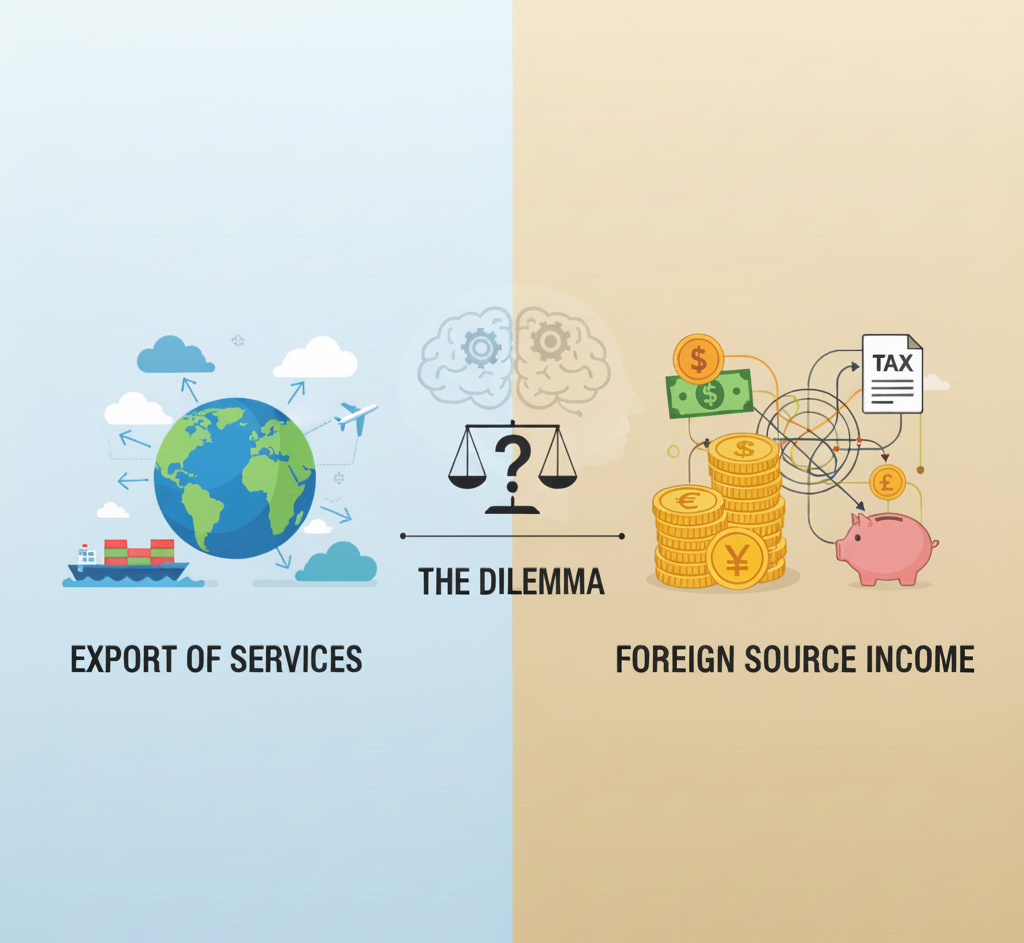
What Does “Export of Services” Mean?
Export of services means you provide a service in your country to someone outside your country, and you get paid in foreign money into your bank account through normal banking channels (like SWIFT/TT).
For example:
- You design a website for a US startup and get paid in USD via bank transfer.
- A UK client pays you for SEO work.
- You’re paid for consulting or training by someone abroad.
How tax works for “Export of Services” (in Pakistan):
- When you receive foreign payment through your bank, the bank deducts tax before crediting you. This is called Section 154A withholding tax.
- Tax rates: Most service exporters pay 1% final tax on export proceeds.
- If you’re registered with the Pakistan Software Export Board (PSEB) and doing IT/IT‑enabled services, you may pay a reduced rate, sometimes 0.25%.
These tax rules are treated as final tax, meaning once this 1% (or 0.25%) is paid, you generally don’t pay more tax on that income.
Why Governments Care About Export of Services
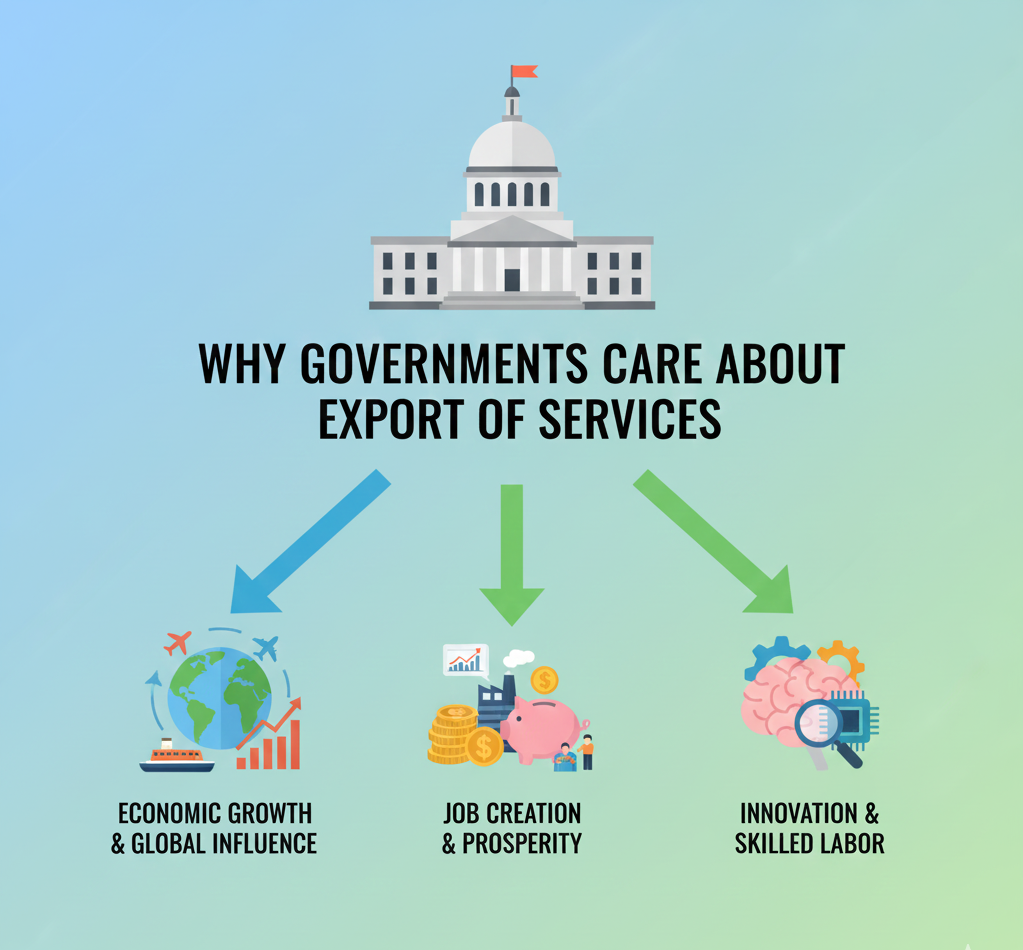
Export of services brings foreign exchange (foreign currency) into the country. Foreign exchange strengthens the economy, improves reserves, and supports trade balance.
Because of this benefit, many governments offer lower tax rates or special tax regimes (special tax systems) to encourage service exports.
What Is “Foreign Source Income”?
Foreign source income means your income comes from outside your country, regardless of whether it was paid through your bank or not. It doesn’t have to be services you exported; it can be salary, investment income, rent, etc.
Examples:
- You work for a company in UAE and receive salary.
- You own shares in a US company and get dividends.
- You rent a property in Canada and receive rental income.
How tax works (in Pakistan):
- If you paid foreign tax on this income, Pakistan may give you a tax credit so you’re not taxed twice.
- Some foreign salary for short‑term residents may even be exempt (up to 3 years if you are in Pakistan only because of your job).
- Salary earned abroad may be exempt if tax was paid there and conditions under Section 102 are met.
Residency and Tax Implications
- Residents: Taxed on worldwide income (including foreign source income).
- Non-residents: Taxed only on income sourced in Pakistan.
Foreign Tax Credit:
- Prevents double taxation.
- Example: Salary taxed in USA → Pakistan allows credit for tax paid abroad.
Owning a US non-resident LLC (for example in Delaware or Wyoming) does NOT automatically make your income foreign source income. The source of income depends on where the services are actually performed, not where the company is registered.
Export of Services vs Foreign Source Income — Side‑by‑Side
Many Pakistan-based freelancers operating through US LLCs still qualify for export of services if the work is performed from Pakistan and payments are received through proper banking channels. Company location alone does not decide tax treatment.
Here’s a clear comparison:
| Aspect | Export of Services | Foreign Source Income |
| Core Idea | Service provided to foreign client | Income earned abroad |
| Location of Work | Usually local | Often linked to foreign country |
| Tax System | Special export regime (final tax) | Normal income tax slabs |
| Tax Rate | Low (1% or less) | Depends on slabs & foreign tax credit |
| Banking Requirement | Must be via bank | Not mandatory |
| Examples | Freelance design, IT, marketing | Salary, dividends, rent |
Simple Scenarios to Understand the Difference
Scenario 1:
A freelancer in Pakistan designs websites for US clients and receives USD payments in a Pakistani bank account.
- This is export of services.
- Tax is deducted at source.
- Final tax applies.
Scenario 2:
A person works remotely for a foreign company as an employee and receives salary abroad.
- This is foreign source income.
- Tax depends on residency and treaties.
- Foreign tax credit may apply.
Same foreign money. Very different tax treatment.
Common Mistakes to Understand Export of Services vs Foreign Source Income
A very common mistake is assuming that income earned through a US LLC is always foreign source income. For Pakistan tax purposes, service income depends on where the work is done and who the client is, not just the country of incorporation.
Many people earn money from abroad but make mistakes because they assume all foreign money is treated the same. Below are the most common errors explained simply.
Mistake 1: Treating All Foreign Payments as Export Income
A foreign payment does not automatically mean export of services. What matters is why the money was paid.
If you provided a service to a foreign client (like freelancing, consulting, or IT work), it may qualify as export of services. But if the money is salary, investment income, or something unrelated to services, it is not export income.
Example:
A freelance designer working for a US client → export of services.
A person receiving monthly salary from a foreign company → foreign source income.
Declaring the wrong type can lead to extra tax, penalties, or reclassification by tax authorities.
Mistake 2: Declaring Home Remittances as Income
Home remittance means personal money sent from abroad, such as:
- Money sent by family members
- Your own savings transferred from another country
This money is not earned income. It is usually tax-exempt.
Declaring remittance as income can:
- Increase your taxable income
- Push you into a higher tax bracket
- Make you pay tax on money that should be tax-free
Tip: Keep remittances separate from business or freelance income.
Mistake 3: Ignoring Contracts and Documentation
Tax authorities rely on documents, not explanations.
They usually ask for:
- Contracts (to show nature of work)
- Invoices (to show services provided)
- Bank statements or bank advice
- Clear payment descriptions
Poor or missing records can lead to disputes, higher tax, or loss of tax benefits.
Simple rule: If you earn from abroad, always keep proper records.
Practical Steps to Stay Compliant (Step-by-Step)

Staying compliant means following tax rules correctly so you avoid penalties, notices, or future problems. These steps are simple but very important for anyone earning money from abroad.
Step 1: Understand Your Income Type
Before filing taxes, first understand what type of income you are earning. Do not assume based on currency alone.
Ask yourself:
- Am I providing a service?
- Is my client located outside my country?
- Where is the income actually generated?
If you are providing services to a foreign client, it may qualify as export of services. If the income is salary, investment income, or something else, it may fall under foreign source income.
Step 2: Use Proper Banking Channels
Always receive export payments through:
- Banks
- Authorized foreign exchange dealers
Receiving payments through proper channels creates an official record. It also helps banks deduct export tax correctly and supports your claim that the income is export of services.
Avoid informal or undocumented payment methods for business income.
Step 3: Register Where Required
If you are providing IT or IT-enabled services, check whether you are eligible to register with the Pakistan Software Export Board (PSEB).
Registration can:
- Help you qualify for reduced tax rates
- Strengthen your position as a service exporter
- Make compliance easier in the long run
Step 4: File Tax Returns Properly
Even if your export income is taxed under a final tax regime, filing a tax return is usually still required.
Filing returns:
- Keeps your tax record clean
- Helps avoid penalties for non-filing
- Allows you to declare income correctly
Never skip filing just because tax was already deducted.
Step 5: Keep Records
Always maintain basic documents, including:
- Contracts (to show nature of work)
- Invoices (to show services provided)
- Bank statements (to show receipts)
- Tax deduction certificates
Good records protect you if questions arise later.
US non-resident LLC ownership adds extra compliance requirements but does not automatically change income classification. Misunderstanding this often leads to incorrect filings, loss of export tax benefits, or future audit issues.
Real-Life Case Studies Explained

Case 1: Freelancer Misclassification
Scenario:
A freelance designer in Karachi completed a project for a US client. The client paid $2,000 via PayPal, which the freelancer deposited into a local bank account.
What Happened:
- The freelancer mistakenly reported it as foreign source income instead of export of services.
- Foreign source income would have been taxed under normal income slabs (~10–35%).
- During an FBR audit, the authorities reviewed the invoice, contract, and bank transaction.
Outcome:
- FBR clarified that since the service was delivered from Pakistan to a foreign client and payment was through authorized channels, it qualified as export of services.
- The tax liability was recalculated at 1% final tax, significantly lower than regular income tax.
Lessons Learned:
- Always classify income correctly based on the nature of service and client location.
- Maintain clear contracts, invoices, and bank proof to support export status.
- Misclassification can lead to overpaying tax and unnecessary paperwork.
Case 2: IT Exporter PSEB Registration
Scenario:
A small IT company in Lahore was providing software development services to clients in the US, UK, and UAE. International payments were made in USD directly to the company’s bank.
Action Taken:
- The company registered with Pakistan Software Export Board (PSEB).
- Registration required submitting company documents, service details, and client contracts.
Outcome:
- After registration, payments received for software services qualified for 0.25% final tax instead of the standard 1% for unregistered exporters.
- Filing tax returns became simpler, as FBR recognized the company as a registered IT exporter.
Lessons Learned:
- PSEB registration can save money and simplify tax compliance.
- Proper registration improves credibility with clients and authorities.
- Helps in avoiding future disputes or misclassification issues.
Case 3: Remote Worker Salary Abroad
Scenario:
A Pakistani resident worked remotely for a US-based company. The monthly salary was deposited into a US bank account in USD.
Action Taken:
- When filing the Pakistani income tax return, the worker reported the income as foreign source income.
- Taxes had already been paid in the US, so the worker claimed a foreign tax credit under Sections 102 & 103 of the Income Tax Ordinance, 2001.
Outcome:
- Foreign tax credits offset the tax liability in Pakistan, preventing double taxation.
- The worker complied fully with FBR requirements without paying extra taxes in Pakistan.
Lessons Learned:
- Foreign salaries are not export income; they are foreign-source income.
- Proper reporting ensures compliance and tax efficiency.
- Keeping foreign bank statements and US tax documents is essential to claim credit.
If your situation feels similar to any of these examples, a quick review with Scounts can help clarify the right classification of export of services vs foreign source income before it becomes a tax issue. Their team often walks through real cases like these in short, no-pressure consultations.
Conclusion
Export of services vs foreign source income are not the same, even though both involve foreign money. The difference lies in:
- Where income is generated
- Nature of work
- Legal classification
Understanding this difference helps you:
- Pay the right tax
- Avoid penalties
- Stay compliant
- Keep peace of mind
If your income involves foreign clients or companies, learning these basics is not optional. It is essential. Every case has small details that change the outcome. Some readers choose to run their setup past Scounts to confirm they’re on the right side of compliance before filing.
Frequently Asked Questions
A: No. Only if you provided a service to someone abroad and it was paid via proper banking channels.
Source: Federal Board of Revenue (FBR) – Export of Services Guidelines, 2025
A: Yes, under Sections 102 & 103 if taxes were paid abroad.
Source: Income Tax Ordinance, 2001 – Sections 102 & 103 (Foreign Tax Credit Provisions)
A: No, personal remittances are usually tax-exempt if not linked to business or services.
Source: State Bank of Pakistan (SBP) – Foreign Exchange Manual
A: Not mandatory, but recommended for tax benefits and official recognition.
Source: Pakistan Software Export Board (PSEB) Official Guidelines
A: You may face extra tax, penalties, audit notices, or loss of exemptions.
Source: Income Tax Ordinance, 2001 – Assessment & Penalties
Disclaimer: This article is authored by a writer at Scounts Private Limited. Please note that the fees mentioned are subject to change and may not be accurate at the time of reading. The content has not yet reviewed by any of our LLC taxation experts. For expert advice or services, feel free to contact us.
