Real‑World Guidance for Pakistan‑Based Founders + Non‑Resident Owners
Introduction
Amazon FBA sellers, Shopify store owners, SaaS founders, consultants, and digital service providers from outside the U.S. all see the same promise when it comes to risks in Tax and Compliance for foreign-owned U.S. LLCs: access to the world’s biggest market, trusted payment systems, and global customers.
But many of them share the same dangerous assumption:
“I formed an LLC in the U.S., but since I live overseas and earn small amounts, states won’t care.”
This assumption is the reason thousands of foreign-owned U.S. LLCs fall into penalties, audits, frozen accounts, and unexpected tax bills.
In this article, we’ll break down which U.S. states are the highest risk, why foreign owners are often targeted, and what real compliance mistakes look like in practice. You’ll also learn tax and compliance risks for foreign-owned U.S. LLCs, how states detect non-compliance, even when sellers are overseas, and what simple steps you can take to stay safe.
Why States Care More Than You Think
Many foreign founders focus only on federal requirements.
They file (or plan to file) a federal return.
They think IRS rules are the main issue.
They assume states only matter if they have a physical office.
That mindset is outdated. Today, states aggressively enforce sales tax, income tax, franchise tax, and annual reporting rules, even when the business owner lives abroad.
Why?
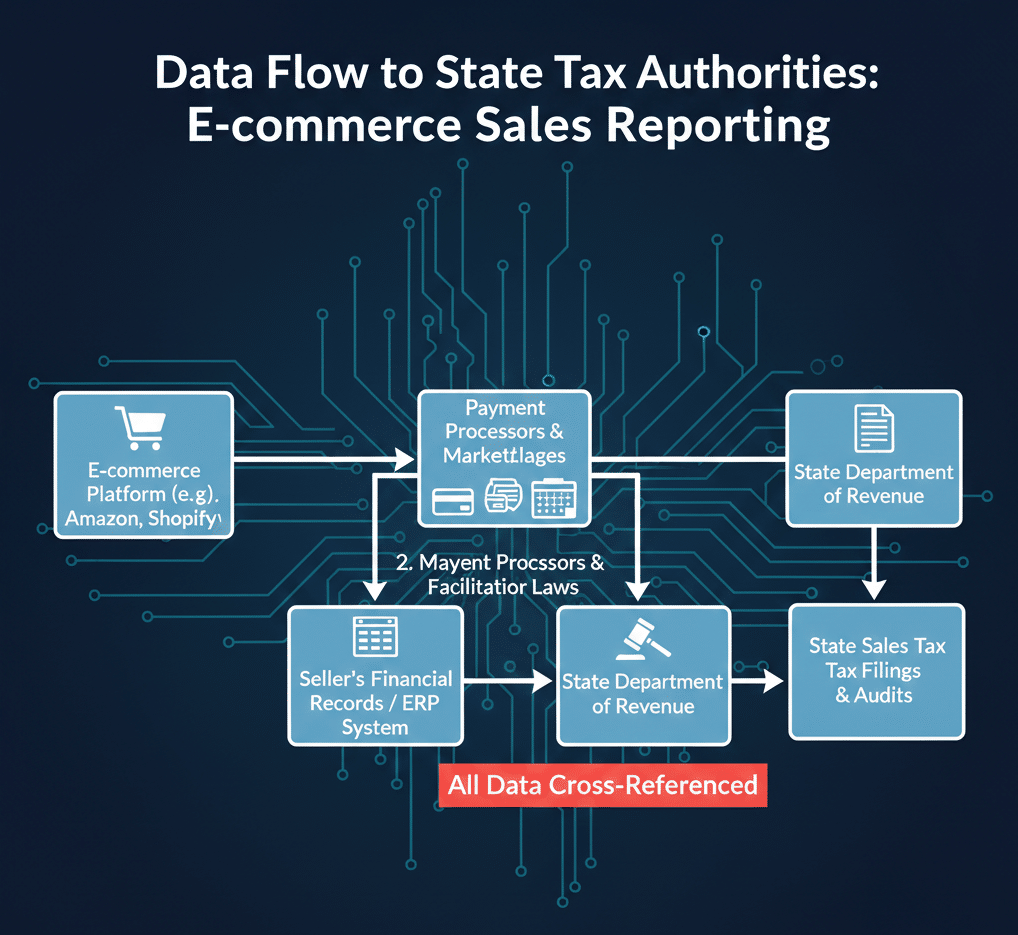
Because states now receive data automatically from:
Amazon, Shopify, Stripe, PayPal, Etsy, Walmart, and logistics providers. If money flows through a platform, states can trace it.
Once nexus is detected (a legal connection between your business and a state), obligations begin, whether you understand them or not.
Understanding “Nexus” before getting into Common states + Risks in Tax and Compliance
Nexus simply means a sufficient connection with a state.
For foreign-owned LLCs, nexus usually happens through:
- Economic activity (sales volume or transaction count)
- Inventory stored in warehouses
- Employees or contractors
- Affiliates or fulfillment services
You do not need to live in the U.S also you do not need a physical office.
Economic nexus (tax responsibility created by sales volume, not physical presence) alone is enough in most states. For example, selling $100,000 worth of goods into a state can trigger tax duties, even if you’ve never set foot there.
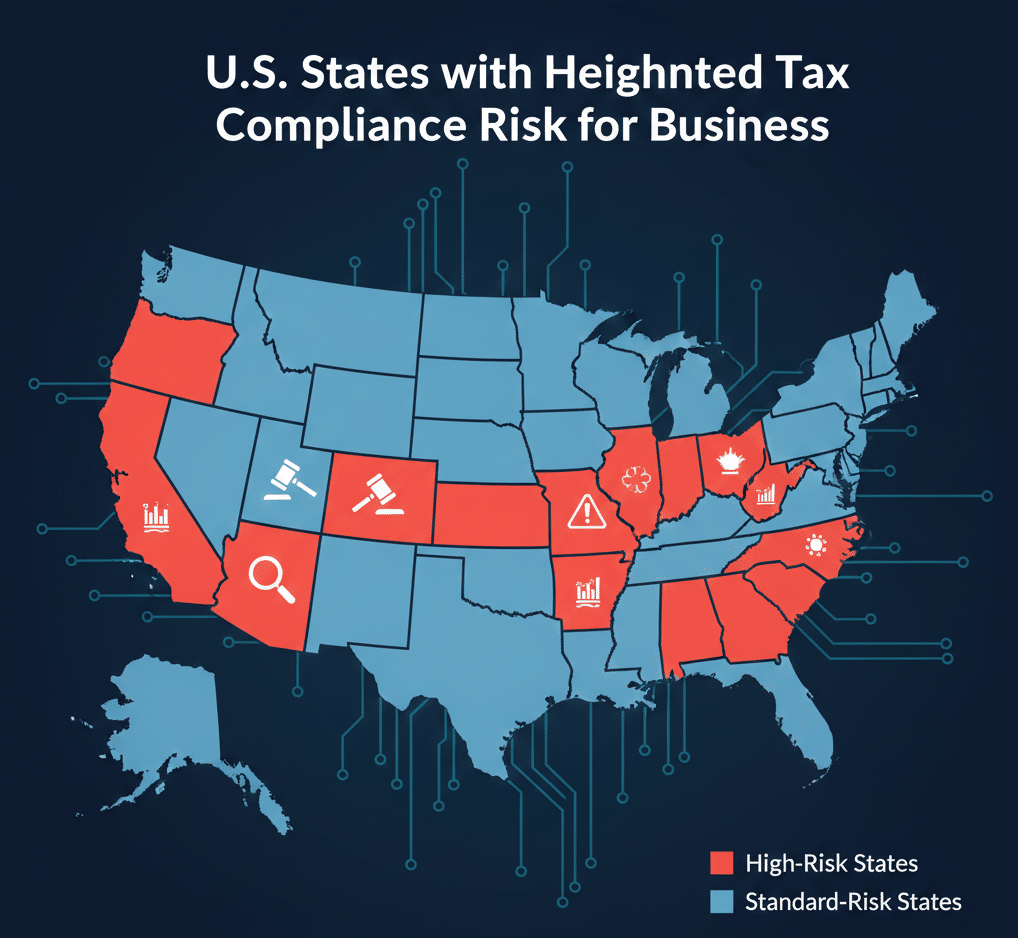
High-Risk States Foreign-Owned LLCs Should Watch Closely the Risks in Tax and Compliance
California: The Most Aggressive Enforcement State
California is often the most expensive mistake foreign founders make.
If California decides your LLC is “doing business” (engaging in activities that create tax obligations) in the state, it applies:
- A minimum $800 annual franchise tax (a fixed annual fee for LLCs)
- Income tax filing requirements
- Late penalties and interest
Even if:
- The business made no profit
- The owner never visited the U.S.
- Sales were handled by Amazon
Amazon FBA inventory (products stored in Amazon warehouses) alone can create nexus, because warehouses are frequently located in California. Foreign sellers often discover this years later when California sends a backdated assessment.
Delaware: Simple to Start, Easy to Forget, Costly to Ignore
Delaware is popular because it has no state sales tax and a business-friendly image. However, Delaware still requires:
- Annual franchise tax (mandatory yearly fee)
- Annual report filing (company information update)
- Active registered agent (official contact person in the state)
Foreign founders often assume that if they do not operate in Delaware, nothing is owed. That assumption leads to penalties.
Delaware charges franchise tax even if the business is inactive or has zero income.
New York: Quiet at First, Strict Later
New York often allows non-compliance to build silently. Common triggers include:
- Repeated sales to New York customers
- Digital product delivery
- Economic nexus thresholds
Once detected, New York typically demands:
- Back sales tax (tax from previous years)
- Interest
- Penalties
- Immediate registration
Foreign owners are often surprised by how far back New York can assess liabilities.
Texas: No Income Tax Does Not Mean No Compliance
Texas does not charge state income tax, which gives a false sense of safety.
However, Texas still enforces:
- Franchise (margin) tax filings (a business activity report)
- Public Information Reports (ownership disclosure)
- Sales tax compliance
Even if no tax is owed, filings are still mandatory. Failure to file can place the LLC in bad standing.
Florida and Washington: Different Risks, Same Outcome
Florida actively enforces sales tax on remote sellers (out-of-state businesses selling to Florida) and marketplace participants. Many foreign founders assume platforms handle everything, but reporting responsibilities still exist.
Washington is particularly strict with:
- SaaS businesses
- Digital products (software, downloads, SaaS)
- Online services
Even non-physical businesses frequently trigger Washington tax obligations.
Common State Risks for Foreign-Owned LLCs
| State | Primary Risk | Common Trigger | Typical Outcome |
|---|---|---|---|
| California | $800 minimum tax | FBA inventory | Back taxes + penalties |
| Delaware | Franchise tax | Missed annual filings | Late fees |
| New York | Sales tax audits | Economic nexus | Multi-year assessments |
| Texas | Franchise filings | Revenue thresholds | Loss of good standing |
| Washington | Digital tax | SaaS users | Penalties |
How States Detect Foreign-Owned Businesses
Many foreign founders believe distance provides anonymity in tax and compliance risks for foreign-owned U.S. LLCs. In reality, states receive data from:
- Amazon, Shopify, Stripe, PayPal
- Shipping and fulfillment providers
- Federal tax filings
- Marketplace facilitator reports (platform-reported sales)
Once sales patterns appear, enforcement is automated. Notices are often sent years later, when penalties are already significant.
LLC Structure Also Affects Risk
How your LLC is taxed federally influences how states view your compliance.
A Single-Member LLC (one owner) owned by a foreign person has different reporting obligations than a Multi-Member LLC (two or more owners) or a C-Corporation (separate taxable entity).
If you are unsure which structure applies to your business, Scounts provides detailed guidance on:
Understanding this distinction early often prevents state-level confusion later.
Practical Steps to Reduce State Tax Risk
Foreign-owned LLCs don’t need perfect compliance for understanding Tax and compliance risks for foreign-owned U.S. LLCs. They need informed compliance.
Key steps include:
- Identifying where customers are located
- Tracking inventory storage locations
- Understanding marketplace tax collection rules
- Filing required reports even when no tax is due
- Closing inactive LLCs properly
Many founders only realize the importance of these steps after receiving a notice. Getting clarity earlier shows where risk actually exists.
At this stage, many business owners choose to speak with a specialist rather than guessing. A short conversation with Scounts can help identify exposure areas without committing to services.

Why Foreign-Owned LLCs Face Higher Compliance Risk
Foreign founders are not targeted unfairly for tax and compliance risks for foreign-owned U.S. LLCs. They are more likely to be non-compliant unintentionally due to:
- Lack of state-level knowledge
- Conflicting online advice
- Over-reliance on platforms
- Language and legal system differences
States assume compliance responsibility rests with the business owner, regardless of location.
When Professional Guidance Makes Sense
Many foreign founders wait until penalties appear before seeking help. In practice, early clarification saves more money than late correction.
If your business:
- Uses Amazon FBA
- Sells to multiple U.S. states
- Delivers digital products
- Has crossed sales thresholds
- Has missed past filings
A brief review can clarify obligations and reduce uncertainty. This is often why founders reach out to Scounts for an initial discussion rather than formal engagement.
Details are available here.
Conclusion
Forming a U.S. LLC as a foreign entrepreneur is not risky by itself. Ignoring state tax and compliance obligations is.
California, Delaware, New York, Texas, Florida, and Washington are not random problem states. Their rules are clear, their enforcement is data-driven, and their penalties grow quietly over time.
The goal is not fear or over-compliance. The goal is understanding where risk exists and managing it early.
For founders who want clarity on tax and compliance risks for foreign-owned U.S. LLCs
before issues arise, speaking with experienced professionals often provides direction without pressure. Many foreign-owned LLCs begin that process by connecting with Scounts when questions first appear, rather than after notices arrive.
Disclaimer: This article is authored by a writer at Scounts Private Limited. Please note that the fees mentioned are subject to change and may not be accurate at the time of reading. The content has not yet reviewed by any of our LLC taxation experts. For expert advice or services, feel free to contact us.
